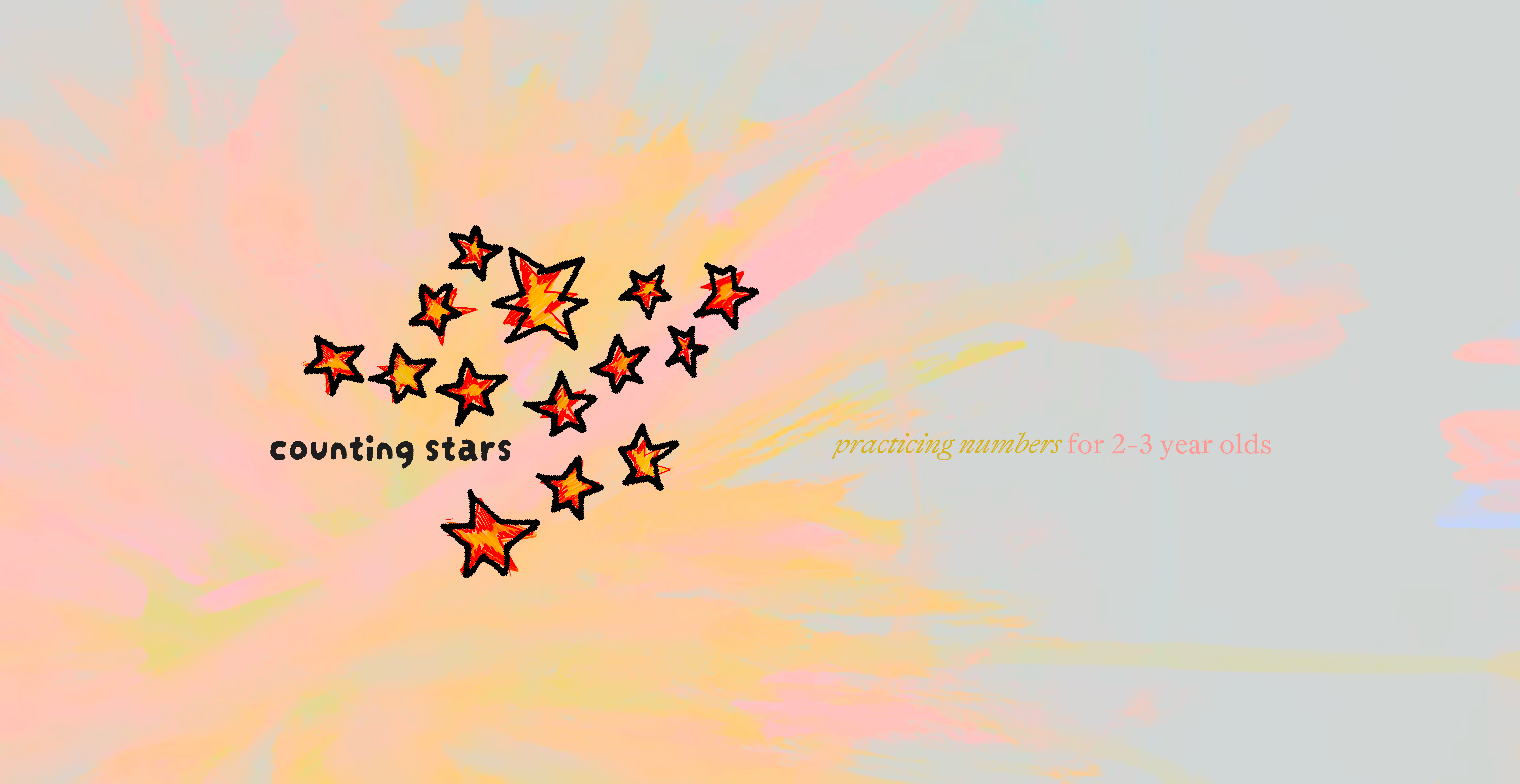
Counting stars
Read study
↓
↓
February 2026
Star light expressed through the eyes of a child.
Initial curiosity
I participated in Figma's Makeathon, in an attempt to understand how their prompt-to-app tool worked. Depending on which watering hole you frequent, its society influences the new tools one should explore. Figma's had an interesting tool journey, so I was interested to explore how Make would add value to my already fragmented experience. I'm fearful of being designed by Figma lol so I presumed this would be at least fun.
Idea
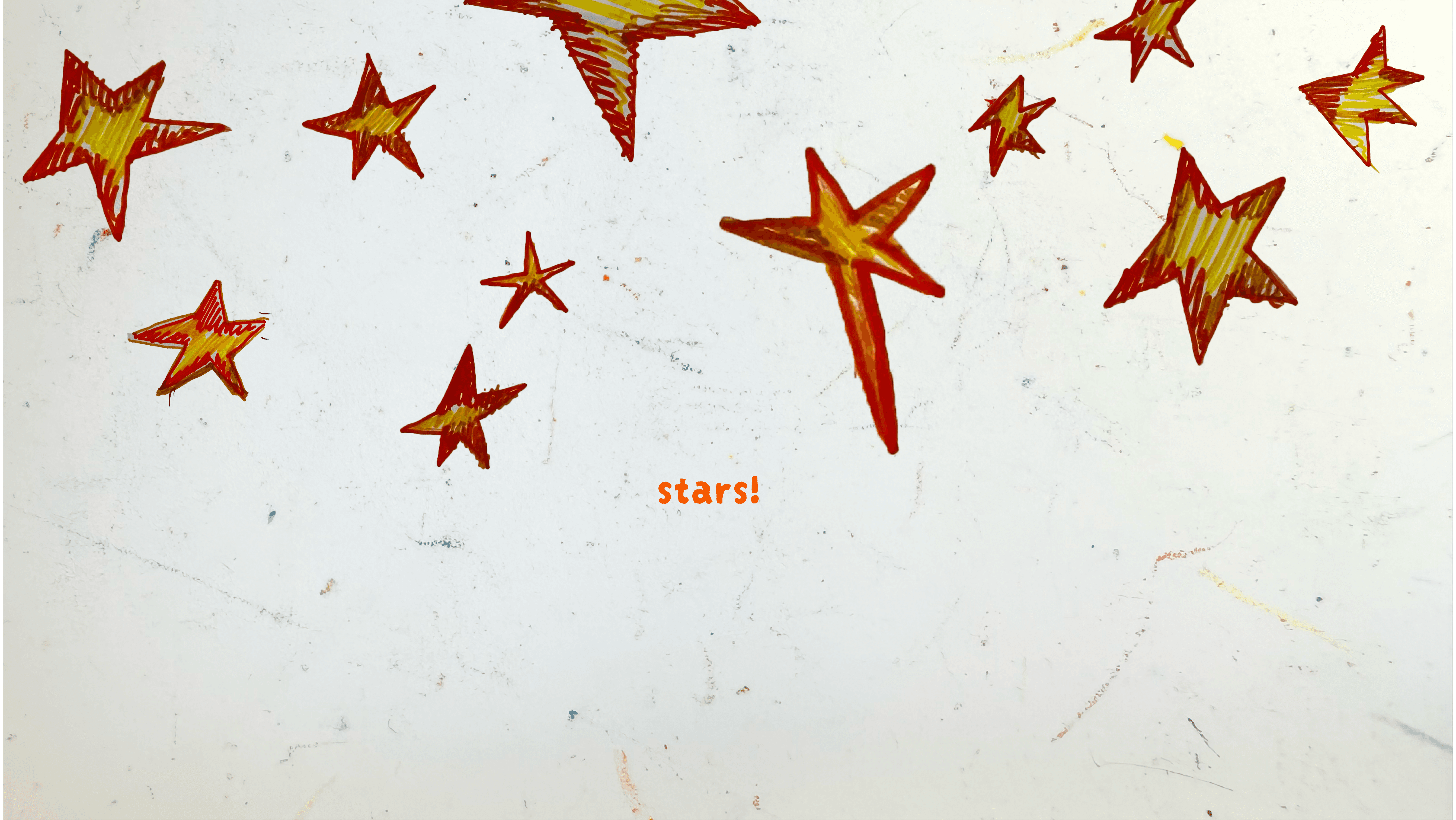
Focusing, for 15 minutes, on a simple idea to test Make turned into a question of 'I wonder how 2026 looks to my toddler?' As we've slowly collaborated to uncover some of life's mysteries, we've been learning to count (it's remarkable how we learn to do). An interactive game based on how to quantify the world was the only logical choice.
Build
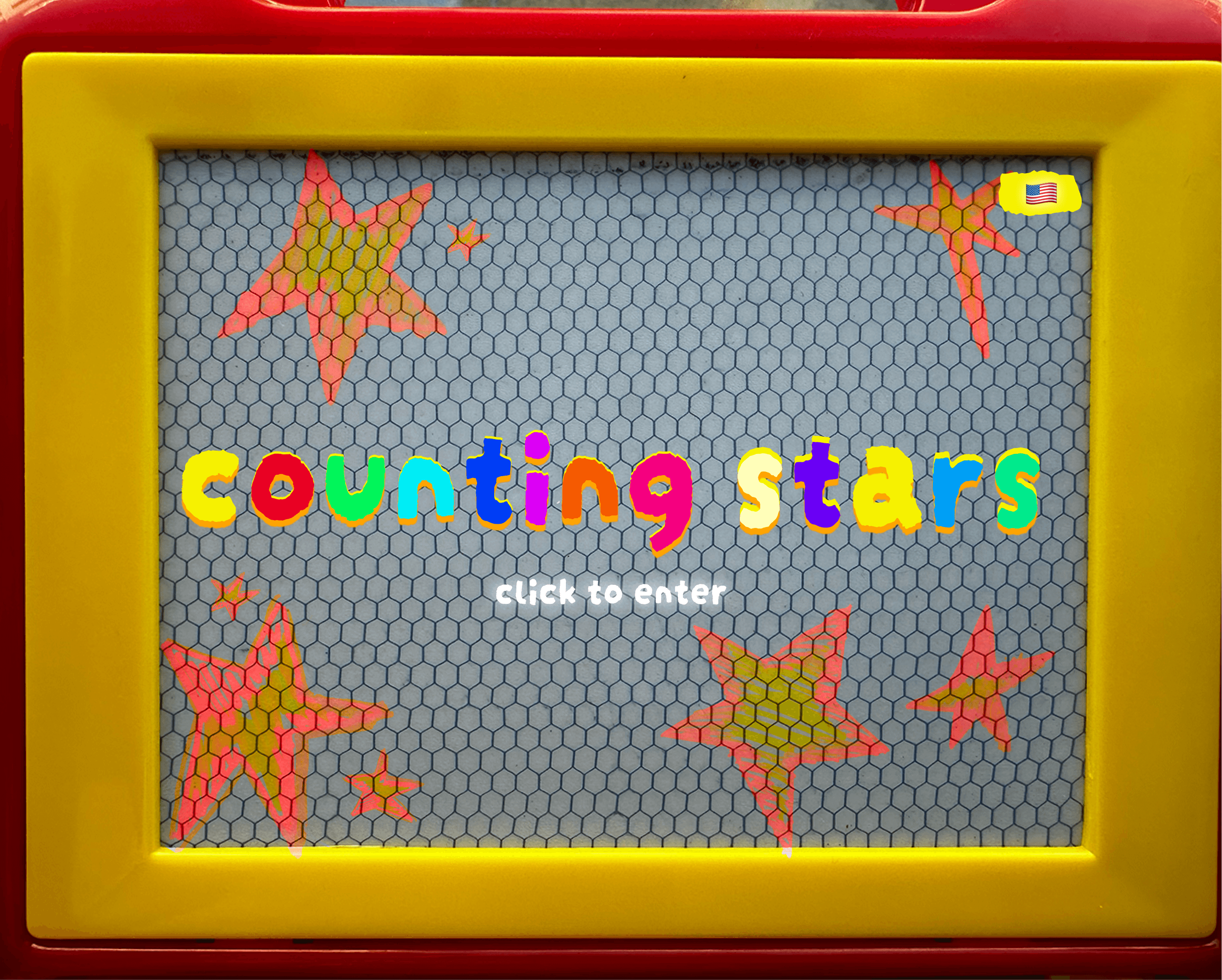
Initial asks surrounded around if I can build with familiar household items? pulling from collective paintings, drawings and toys? Zero budget –don't buy anything. The tension of grand idea plus no money creates unexpectedly special things.
The how was fairly standard, but something I hadn't expected is how wonderful it was to design for tiny humans. They're so happy with everything, it's energy giving. I photo'd the chosen items before editing in PS and built the library in Figma. The output from curating the vision to Make was troublesome at times. I've found it helpful to understand how the model best receives input to reach my desired output.
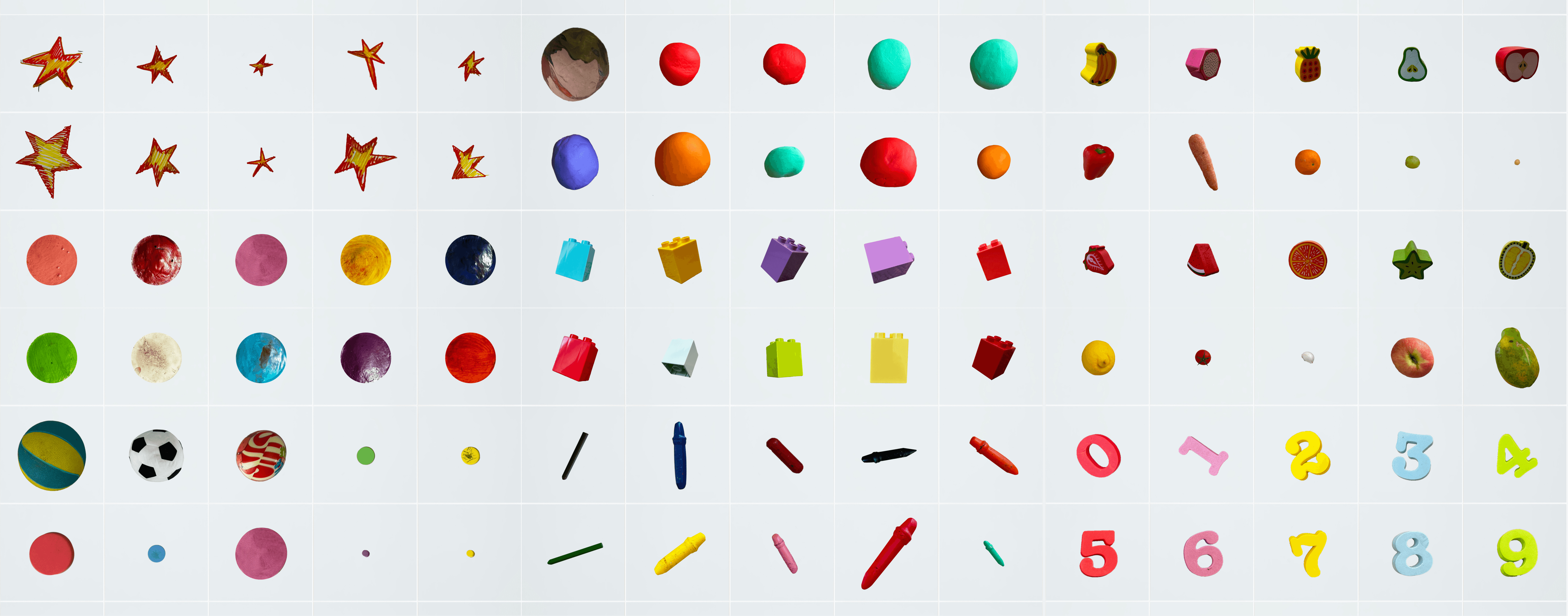
Tradeoffs and constraints
I ran a test, which presented an oversight on a outer boundary, otherwise the idea had been validated.
Initially I wanted to this to be an 8-bit style game on e-ink device. I looked into building an e-ink screen smh 🫠 and while there's a fun YT rabbithole, the tech is expensive and wouldn't execute in time. I opt'd to get out of the way.
I uncovered an old iPad, and the software to hardware back and forth was a tragedy. Shout out to DuetDisplay, which after more back and forth we finally got it in flow. The experience in the wild was key, any setbacks that didn't cater to the in-person experience were nixed.

Closing thoughts
Building a product—concept-to-implementation—in three days is exhilarating. Learning of a new audience to serve, was a revelation. Branding, direction and design still require substantial real estate to facilitate Make's production.
Another consideration around haptics, hardware and scaling require flushing. I didn't leverage all tech, camera-tracking and motion sensing, mainly because of my audience, so there's a bit still to uncover.
With that said, my audience thought it was a success, which was valuable.
Share study